SOME GREAT PLACES MADE BY MUSLIMS.
SOME GREAT PLACES MADE BY MUSLIMS.
Char Minar at Hyderabad

Char-Minar a lavish and magnificent landmark that dates back to the glorious days when India was ruled by kings, Charminar which is most famous monument to visit in Hyderabad. The literal meaning of ‘Char Minar’ is ‘Four Towers’ or ‘Mosque of the Four Minarets’. These were apparently created to represent the first four caliphs of Islam respectively.
The mosque is created from granite, mortar and lime and is an unusual mixture of mosque and arc blended together. It is quite an impressive sight to behold amidst the skyline of Hyderabad. So if you are touring to Hyderabad Don’t forgets to visit Char Minar.
Taj Mahal at Aagara
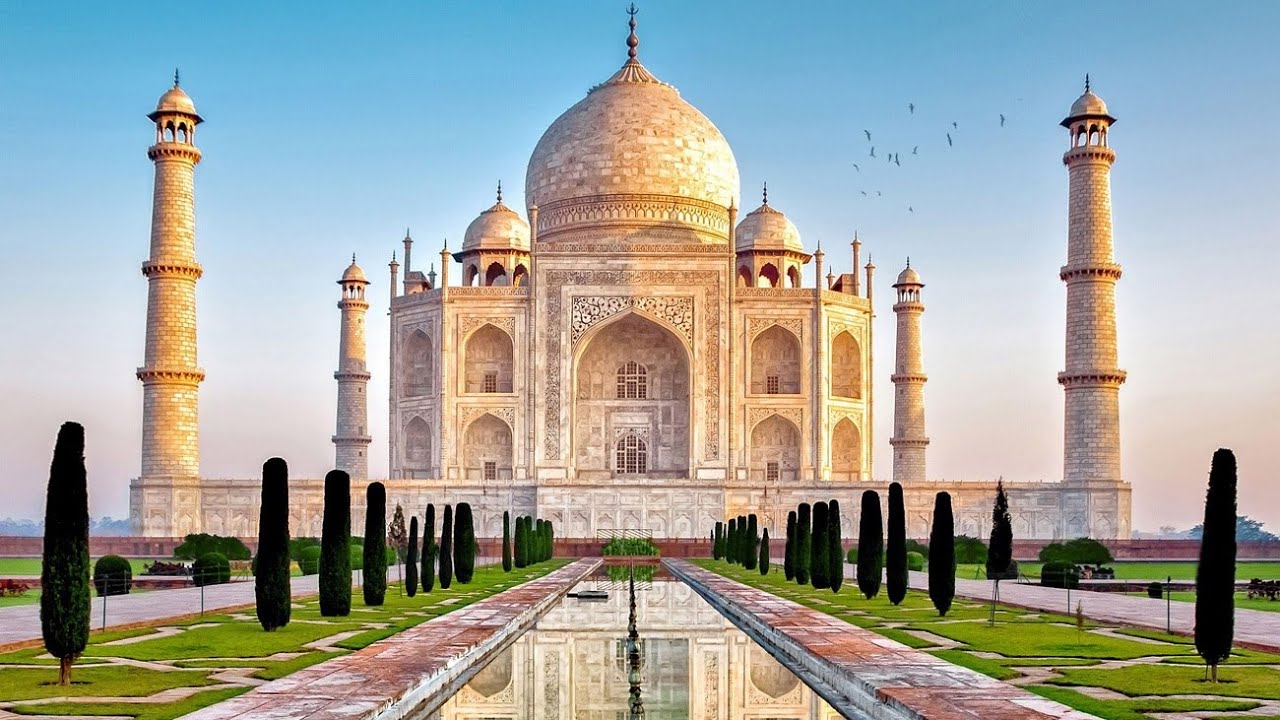
The Taj Mahal is located on the right bank of the Yamuna River in a vast Mughal garden that encompasses nearly 17 hectares, in the Agra District in Uttar Pradesh. It was built by Mughal Emperor Shah Jahan in memory of his wife Mumtaz Mahal with construction starting in 1632 AD and completed in 1648 AD, with the mosque, the guest house and the main gateway on the south, the outer courtyard and its cloisters were added subsequently and completed in 1653 AD. The existence of several historical and Quaranic inscriptions in Arabic script have facilitated setting the chronology of Taj Mahal. For its construction, masons, stone-cutters, inlayers, carvers, painters, calligraphers, dome builders and other artisans were requisitioned from the whole of the empire and also from the Central Asia and Iran. Ustad-Ahmad Lahori was the main architect of the Taj Mahal.
Lal Quila at Delhi
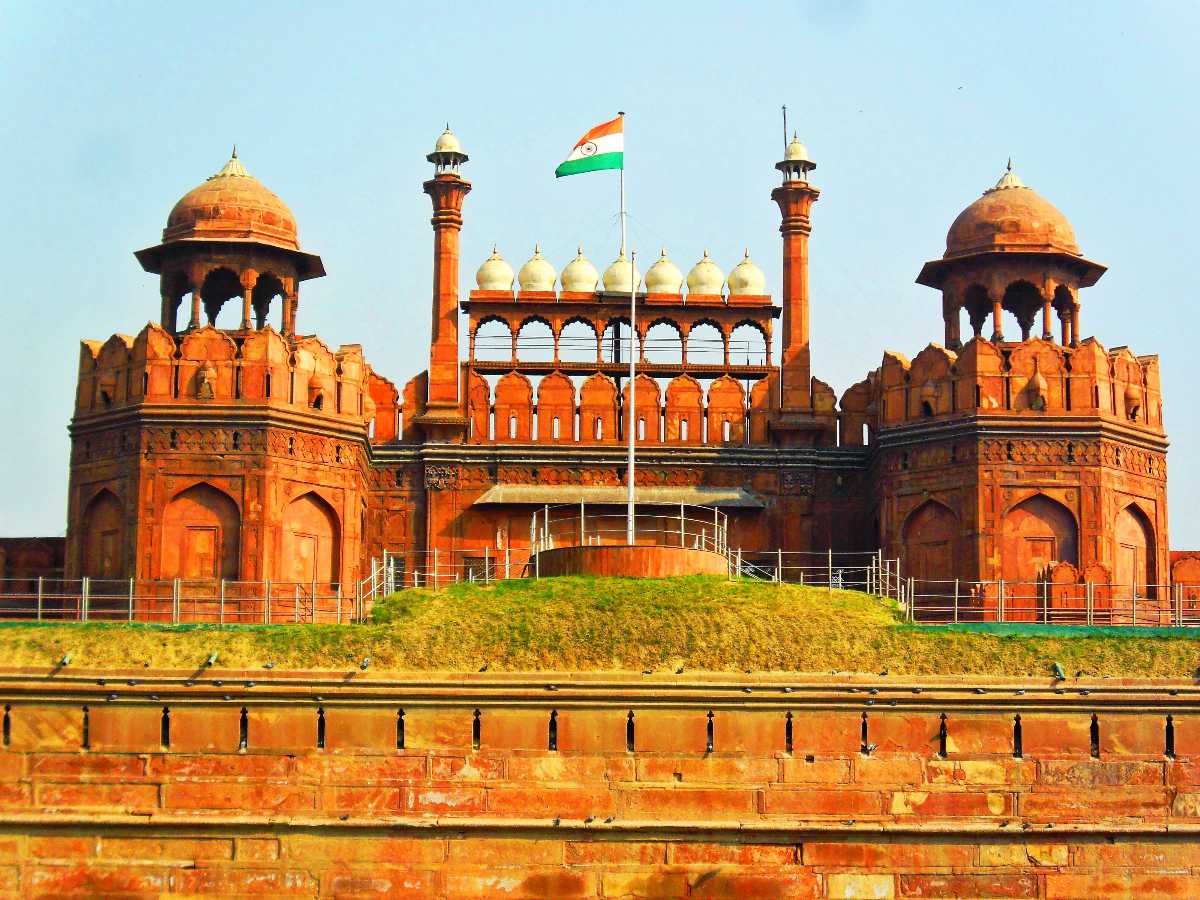
The Red Fort is a historical fortification in the old Delhi area. It was the main residence of the emperors of the Mughal dynasty. Shah Jahan constructed it in the year 1939 as a result of a capital shift from Agra to Delhi. This imposing piece of architecture derives its name from its impregnable red sandstone walls. In addition to accommodating the emperors and their households, it was the ceremonial and political centre of the Mughal state and the setting for events critically impacting the region. Today, this monument is home to several museums that have an assortment of precious artefacts on display. Every year, the Indian Prime Minister unfurls the national flag here on the Independence Day.
Qutub Minar at Delhi

The hightest tower in India.
The Qutub Minar is a towering 73 meter high tower built by Qutub-ud-Din Aibak in 1193. The tower was built to celebrate Muslim dominance in Delhi after the defeat of Delhi’s last Hindu ruler. This tower is the highest tower in India, complete with five storeys and projecting balconies. The first three storeys of the Qutub Minar are made of red sandstone and the last two are made of marble and sandstone.
The construction of the Qutub Minar was started by Qitub-ud-Din Aibak, but he only constructed the basement. The construction of the tower was later taken over by his successor Iltutmish who constructed three more stories. The last two storeys were completed Firoz Shah Tuglak. The different architectural styles from the time of Aibak to Tuglak are clearly visible in the Qutub Minar.
The construction of the Qutub Minar was started by Qitub-ud-Din Aibak, but he only constructed the basement. The construction of the tower was later taken over by his successor Iltutmish who constructed three more stories. The last two storeys were completed Firoz Shah Tuglak. The different architectural styles from the time of Aibak to Tuglak are clearly visible in the Qutub Minar.
Gol Gumbaz at Bijapur

Gol Gumbaz at Bijapur is the mausoleum of king Muhammad Adil Shah, Adil Shah Dynasty. Construction of the tomb, located in Vijayapura (formerly Bijapur), Karnataka, India, was started in 1626 and completed in 1656. The name is based on Gola gummata derived from Gol Gombadh meaning "circular dome". It follows the style of Indo-islamic architecture. Even a slight whisper by someone standing in this gallery can be heard everywhere in the gallery, and if somebody claps, the echo can be heard several times.
Bibi Ka Maqbara at aurangabaad

The Bibi Ka Maqbara (English: "Tomb of the Lady") is a tomb located in Aurangabad, Maharashtra, India. It was commissioned in 1660 by the Mughal emperor Aurangzeb in the memory of his first and chief wife Dilras Banu Begum (posthumously known as Rabia-ud-Daurani) and is considered to be a symbol of Aurangzeb's 'conjugal fidelity'. It bears a striking resemblance to the Taj Mahal, the mausoleum of Aurangzeb's mother, Mumtaz Mahal.[6] Aurangzeb was not much interested in architecture though he had commissioned the small, but elegant, Pearl Mosque at Delhi. Bibi Ka Maqbara is the largest structure that Aurangzeb has to his credit.


Comments
Post a Comment